
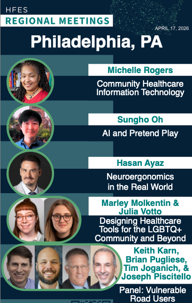
Why Cyclist & Pedestrian Crashes Aren't "Accidents" - Piscitello Law Joins Panel on Vulnerable Road Users during National Human Factors Conference April 17, 2026
When the Human Factors and Ergonomics Society began assembling its 2026 regional conference panels, they invited Joe Piscitello because his work in bicycle crash litigation regularly intersects with human factors principles. His experience brings a practical, case‑based perspective that complements the research and engineering viewpoints typically represented at these events.
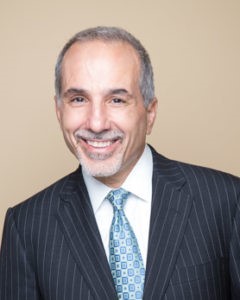
Panels on vulnerable road user safety often feature academics, engineers, and designers. This one also includes someone who works directly with the real‑world consequences of system design and driver behavior. Joe’s role involves explaining how crashes occur, why they were predictable, and how they might have been avoided — insights that add a useful applied dimension to the discussion alongside the conference’s human factors and forensic science experts.
The Panel: Where Science and Law Meet
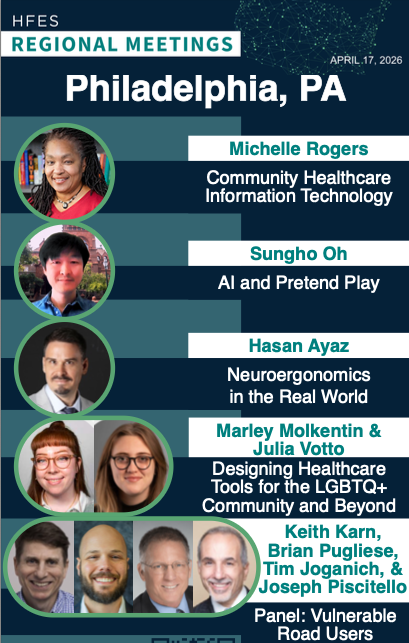
On April 17, 2026, the Human Factors and Ergonomics Society (HFES) will host a nationwide telecast of regional conferences across seven cities. The Philadelphia seminar takes place at the Ethical Society of Philadelphia and brings together researchers, designers, and safety professionals examining how human factors science shape real-world systems — from healthcare to AI to transportation.
Joe Piscitello will join an afternoon panel focused on Vulnerable Road Users alongside three nationally recognized specialists:
- Dr. Keith Karn is a leading human factors expert who applies behavioral science to improve product safety, usability, and real-world system performance.
- Dr. Brian Pugliese is a nationally recognized forensic engineer specializing in crash analysis and the human factors that shaped driver decision-making.
- Tim Joganich is one of the country's foremost biomechanical and injury-prevention specialists, with deep expertise in pedestrian and cyclist crash dynamics.
There Are No Bicycle "Accidents” And That Distinction Is Critical
Joe's presentation centers on four ideas that are straightforward in theory but transformative in how we think about road safety — and legal responsibility.
The first and most foundational: crashes have causes, and causes create foreseeability.
When we call a crash an "accident," we signal randomness and blamelessness. But bicycle and pedestrian crashes are not random. They follow predictable patterns — the same conflict points, the same driver behaviors, the same infrastructure failures — that researchers have documented for decades. When something is predictable, it is preventable. And when it is preventable and nothing was done, foreseeability attaches.
For injured cyclists in Pennsylvania and New Jersey, this reframing isn't just philosophical. It's the foundation of a damages case.
"I Looked, But I Didn't See the Cyclist" — A Human Factors Explanation
This statement appears in police reports and deposition transcripts with remarkable consistency. Drivers aren't lying. They did look. They just didn't see. Human factors research explains why: drivers are trained — by experience, by road design, by the visual environment — to scan for other cars. When infrastructure does not cause drivers to expect cyclists or pedestrians at a given point, the brain filters them out. It's the predictable result of a system designed around one type of road user.
The implication for crash litigation is significant. When a driver says, "I never saw them," that statement does not end the inquiry — it begins one. Who designed this intersection? What signals did the environment send? Was a known risk left unaddressed? The question shifts from individual blame to systemic foreseeability.
What Good Bike Infrastructure Actually Communicates to Drivers
Protected bike lanes, raised crossings, and dedicated signal phases are not just physical separations. They are communications. They tell drivers: expect someone here. They reduce the cognitive load at conflict points. They make vulnerable road users become part of the driving task rather than an afterthought.
Cities and municipalities that are aware of documented crash patterns at a given location — and fail to install proven countermeasures — are not passive bystanders. Under a human factor’s framework, their inaction is a choice, and that choice has legal consequences. Foreseeability and responsibility rise together.
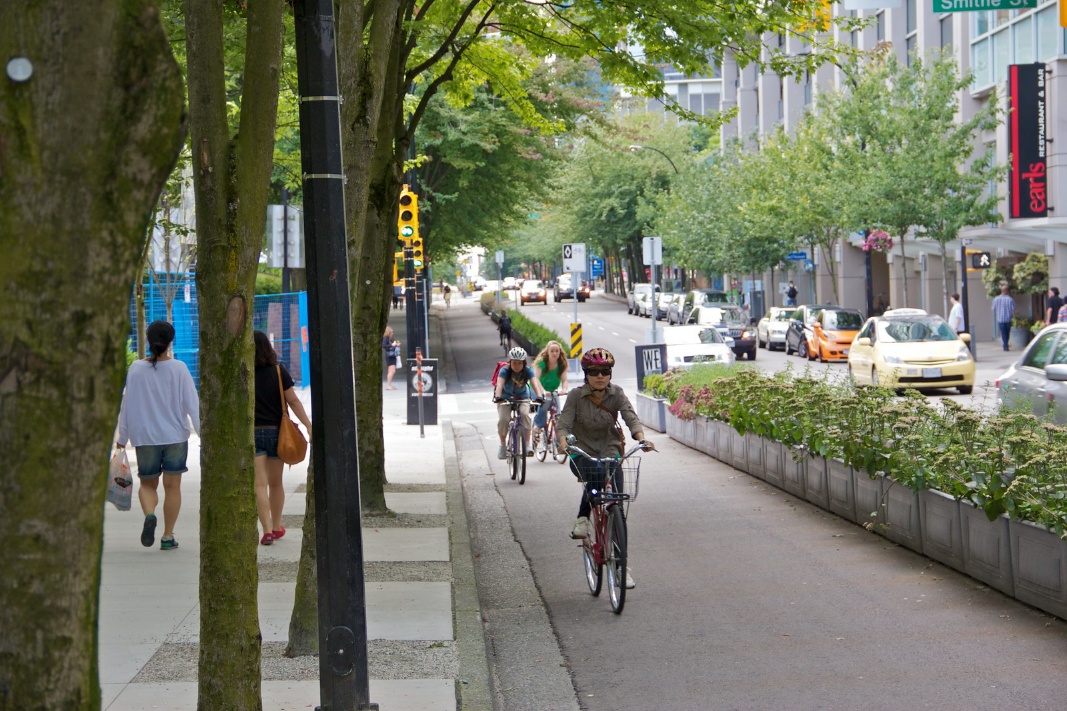
This pix shows how good infrastructure communicates clearly w road users
Why Protected Bike Lanes Get Blocked: The Human Resistance Problem
Engineering a solution is usually simpler than implementing it. Joe's presentation addresses one of the most vexing obstacles in road safety: community resistance to proven infrastructure treatments. He shares a real time example of this community opposition to road safety treatments in his own neighborhood in Society Hill, Philadelphia.
Residents in opposition to protected bike lanes have organized campaigns against life-saving road treatment and point to familiar objections including aesthetic concerns, parking loss, neighborhood character, skepticism about how the infrastructure functions. This dynamic — where the human barriers to safety improvements are harder to overcome than the technical ones — plays out in cities across the country. Understanding this dynamic is essential for advocates, planners, and attorneys alike. When a municipality is aware of this resistance and uses it as a reason to defer safety improvements, the foreseeability question becomes sharper, not softer.
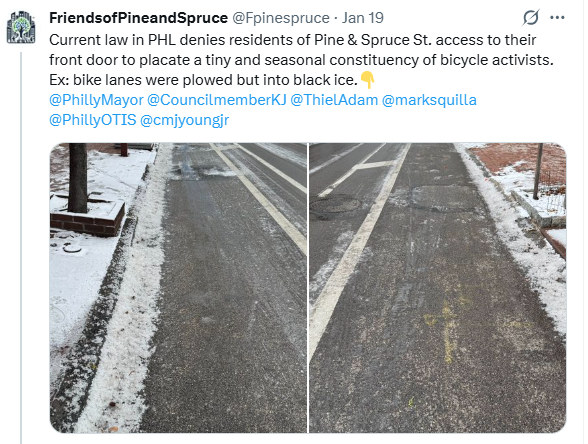
This social post by FOPS reflects the essense of Human Resistance
What Human Factors Framework Means for Injured Cyclists in Pennsylvania and New Jersey
For cyclists injured by motorists, the human factors perspective reframes what happened and who bears responsibility for it.
The driver who didn't see you was operating in an environment that didn't ask them to look. The intersection where you were struck may have a documented crash history.
The municipality that owns those roads may have studied the problem and done nothing. These are not background facts — they are elements of a case.
Joe Piscitello has represented injured cyclists in Pennsylvania and New Jersey for decades. He believes bicycle crashes result from failed road safety design systems, not mere accidents. The human factors framework doesn't just describe that failure. It proves it.
Frequently Asked Questions
What are human factors design in transportation?
- Human factors design in transportation applies knowledge of human perception, attention, and behavior to the design of roads, intersections, and signage. The goal is to build infrastructure that accounts for the limits of human attention rather than assuming drivers, cyclists, and pedestrians will perform perfectly in every situation.
How does road design affect a bicycle crash claim in Pennsylvania or New Jersey?
- If a road design created conditions that made a crash predictable — by failing to alert drivers to expect cyclists, by leaving a documented hazard unaddressed, or by concentrating conflicts at a known dangerous point — a municipality or government entity may share liability alongside the driver. Establishing foreseeability is central to these claims.
What does "foreseeability" mean in a bicycle accident case?
- Foreseeability means that a reasonable person or entity, in the same position, would have anticipated the risk of harm. In bicycle crash litigation, foreseeability often turns on whether a dangerous condition was known, documented, and left unaddressed. When it was, the legal responsibility of the parties who failed to act increases significantly.
Are cyclist crashes different from other vehicle crashes?
- Yes, in important ways. Cyclists are unprotected road users sharing infrastructure that was designed primarily for motor vehicles. The biomechanics of injury are different, the visibility dynamics are different, and the systemic failures that lead to crashes are different. Attorneys who handle bicycle cases specifically — rather than as a subset of general personal injury work — are better positioned to identify and argue these distinctions.
Why does Joe Piscitello focus exclusively on bicycle and pedestrian cases?
- Because the details matter. Infrastructure analysis, cyclist visibility research, driver expectancy, and municipal liability in road design cases all require specialized knowledge. Piscitello Law focuses exclusively on cyclists and pedestrians injured by motorists in Pennsylvania and New Jersey — which means every case benefits from an accumulated body of experience that a general personal injury practice can't replicate.
Joseph T. Piscitello is a bicycle crash attorney at Piscitello Law in Philadelphia, representing injured cyclists in Pennsylvania and New Jersey. He is a cycling advocate, frequent speaker on road safety at cycling clubs and conferences across the region, and a panelist at the 2026 HFES Human Factors Conference