
Recent Fatal Crash Highlights the Evolving Legal Landscape for E-Bikes and Micromobility Devices
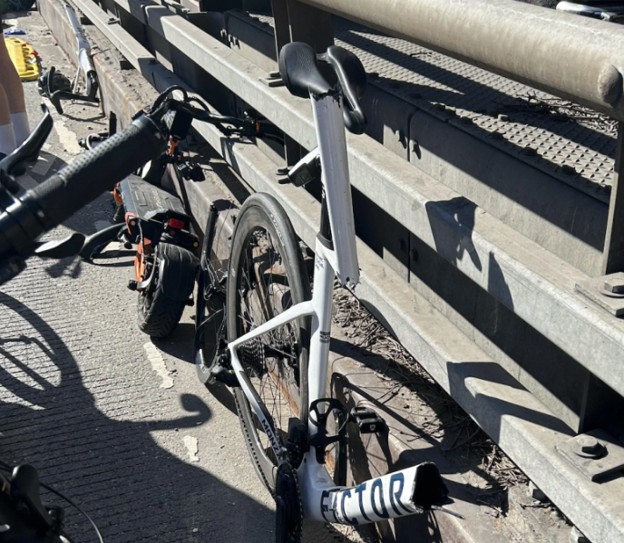
Public attention to e-bikes and other micromobility devices has intensified following a fatal collision on New York City’s Queensboro Bridge on May 28, 2026, where a bicyclist and the operator of a stand-up motorized scooter were both killed. News reports stated that the collision occurred in the bridge’s bike path during the morning commute, and that the scooter involved was allegedly capable of speeds above 50 miles per hour, far beyond the legal threshold for stand-up e-scooters in New York and well above the 15 mph speed limit posted for the bridge path. Authorities have indicated that the crash remains under investigation.
That incident is significant not only because of its tragic outcome, but because it captures a broader problem in the public discussion around micromobility. Devices that are casually grouped together as “e-bikes” or “scooters” are often treated very differently under the law. A lawful low-speed pedal-assist bicycle is not the same as a high-speed stand-up scooter or motorcycle-style electric device, even if all three may appear similar to the public or be discussed together after a crash. Those distinctions can become important when questions arise about roadway legality, insurance, and civil liability.
As e-bikes and related devices have become more common, lawmakers have responded in different ways. Some jurisdictions have retained bicycle-style treatment for certain low-speed electric devices. Others have moved toward a motor-vehicle-style regulatory model that imposes licensing, registration, and insurance requirements. In the Philadelphia region, that divide is especially visible when comparing New Jersey, Pennsylvania, and recent proposals in Philadelphia itself. (Photo Credit: Reddit)
Why Classification Matters
At the center of this issue is classification. In practice, the legal consequences of a crash may depend less on the general label attached to a device and more on its specific characteristics—such as wattage, maximum assisted speed, throttle capability, weight, and the jurisdiction in which it is operated. The same device may be described in ordinary conversation as an “e-bike,” but its legal treatment can change significantly depending on whether it falls within a statutory bicycle definition or instead fits within a moped, motorized bicycle, or motor-driven cycle category.
That distinction matters for at least three reasons. First, it can affect whether the device may be lawfully operated in bike lanes, on public roads, or on certain trails. Second, it can affect whether the operator is expected to hold a license, register the vehicle, or maintain insurance. Third, after a collision, classification may influence how insurers, municipalities, and litigants analyze a claim. For lawyers handling bicycle and micromobility cases, those threshold issues may shape the dispute before traditional negligence questions are even fully addressed.
New Jersey: A Significant Shift in 2026
New Jersey’s treatment of e-bikes changed materially in January 2026 with the enactment of S4834/A6235. According to the New Jersey Motor Vehicle Commission, the state now regulates e-bikes through categories that include low-speed electric bicycles and motorized bicycles, and those categories are subject to a framework that includes operator credentialing, registration, and insurance requirements. The MVC states that riders must generally be at least 15 years old, that many operators must possess either a valid driver’s license or a specific e-bike or motorized bicycle credential, and that e-bikes must be registered and insured before operation where required.
The change is notable because New Jersey had previously treated low-speed electric bicycles more like traditional bicycles under a three-class system. Public reporting and legal commentary on the 2026 law describe the new statute as a substantial departure from that earlier framework, with the practical effect of moving many e-bikes into a more motor-vehicle-style regulatory system. In addition, the MVC has publicly acknowledged that aspects of the licensing and registration process are still being implemented, meaning the regulatory transition is ongoing rather than fully settled in day-to-day practice.
From a legal standpoint, New Jersey’s new approach increases the importance of careful device identification after a crash. Lawyers evaluating a claim may need to determine not only what kind of device was involved, but whether it fell within the low-speed electric bicycle category, whether it required registration or insurance, and whether the rider was operating it in compliance with the current framework. As with many developing regulatory areas, the practical consequences of the statute will likely continue to evolve through administrative guidance, claims handling, and litigation.
Pennsylvania: A Narrow Bicycle Definition
Pennsylvania has taken a different path. Rather than adopting the familiar three-class e-bike structure used in many states, Pennsylvania defines a lawful electric bicycle as a “pedalcycle with electric assist.” Under the Commonwealth’s definition, the device must weigh no more than 100 pounds, have operable pedals, have two or three wheels larger than 11 inches in diameter, use an electric motor rated at 750 watts or less, and be capable of no more than 20 miles per hour on a level surface when powered by the motor alone.
If a device falls within that definition, Pennsylvania treats it as a bicycle rather than a motor vehicle. Public guidance and legal summaries state that a qualifying “pedalcycle with electric assist” does not require a driver’s license, title, registration, or insurance, although riders must generally be at least 16 years old. The narrower statutory approach means Pennsylvania law places substantial weight on the actual specifications of the device rather than the marketing label attached to it.
That feature of Pennsylvania law can become especially important as more high-powered devices are marketed to consumers under broad or imprecise language. A device sold online as an “e-bike” may not necessarily qualify as a lawful Pennsylvania electric-assist pedalcycle if it exceeds the wattage, weight, or speed limits set out in the statute. In those cases, the vehicle may instead fall into a different legal category, such as a moped-style or motor-driven cycle classification, with different roadway rules and compliance requirements. For crash cases, those questions can affect how the claim is framed from the outset.
Philadelphia: Local Regulation on Top of State Law
At the municipal level, Philadelphia has also entered the discussion. In 2026, City Council introduced Bills 260525 and 260526, which public reporting and advocacy statements describe as proposals that would create additional licensing or registration-type requirements for certain e-bike riders, particularly delivery workers. Those proposals have drawn public opposition from transportation and labor groups, which argue that the bills would create new barriers for low-wage riders while overlapping with an area already regulated at the state level.
Whatever one’s view of those proposals, their introduction reflects a broader pattern: local governments are increasingly confronting the same questions that states have been wrestling with for several years. Those questions include how to distinguish legal low-speed e-bikes from faster or more powerful devices, how to regulate delivery use in dense urban areas, and how to respond to public concern about safety without collapsing distinct categories into a single label. In that respect, Philadelphia’s recent proposals are best understood as part of the larger history of micromobility regulation rather than an isolated development.
Recent Events and the Broader Safety Debate
The recent Queensboro Bridge fatalities are likely to intensify this conversation. According to multiple reports, the stand-up scooter involved in that crash was allegedly capable of speeds above 50 mph, and advocates and reporters have tied the incident to ongoing concerns about higher-speed devices operating in spaces designed primarily for bicycles and other lower-speed traffic. At the same time, those same reports underscore why legal distinctions matter: the device highlighted in the New York coverage was not described as a standard low-speed pedal-assist bicycle, but as a stand-up motorized scooter that may have exceeded the legal limits for its class.
That distinction is important because the public conversation often moves quickly from one category to another. A tragic crash involving an allegedly illegal, high-speed device can lead to broader calls for regulation affecting lawful low-speed electric bicycles as well. Conversely, a regulatory framework that does not account for meaningful differences in device capability may create its own enforcement and liability problems. As a historical matter, much of micromobility law has developed through precisely this tension: lawmakers trying to respond to new safety concerns while statutes struggle to keep pace with a rapidly changing product category.
Practical Legal Consequences After a Crash
For riders, families, and attorneys, the practical lesson is straightforward: after a crash involving an e-bike, scooter, or similar device, the legal analysis often begins with the machine itself. Counsel may need to examine the device’s speed capability, power output, design, and whether it fits within the governing jurisdiction’s statutory definition. That inquiry may in turn affect whether the operator was lawfully on the roadway, whether licensing or registration obligations applied, and how insurers or opposing parties characterize the claim.
In that sense, micromobility cases often involve more than ordinary bicycle-crash analysis. They can also require attention to vehicle classification, local ordinances, developing administrative rules, and shifting public policy. Recent events in New York have brought those issues into sharper focus, but the underlying legal questions are not limited to New York. They are already present in the regulatory frameworks of New Jersey, Pennsylvania, and Philadelphia, and they are likely to remain important as use of these devices continues to expand.
Conclusion
The legal treatment of e-bikes and micromobility devices remains a developing area shaped by technology, public safety concerns, and jurisdiction-specific statutory choices. Recent fatal events have increased public attention, but they have also highlighted the importance of precision. Not every device that enters the public conversation under the term “e-bike” is the same under the law, and those differences may materially affect liability, compliance obligations, and insurance questions after a collision. A careful, fact-specific analysis remains essential in any case involving this evolving category of transportation.